Adult acne: why it starts at 30 and what the teenage advice gets wrong
Adult acne sits lower on the face, is more inflammatory, and responds badly to the drying regimen that worked at fifteen.
Not yet reviewed by a dermatologist. General information only.
Key Takeaways
- Adult acne is not teenage acne, and drying the skin out tends to make it worse.
- Give any treatment a full twelve weeks before deciding it has failed.
- The dark marks left behind are a separate problem from the spots themselves.
- Scarring, painful lumps or a sudden change warrant a dermatologist in person.
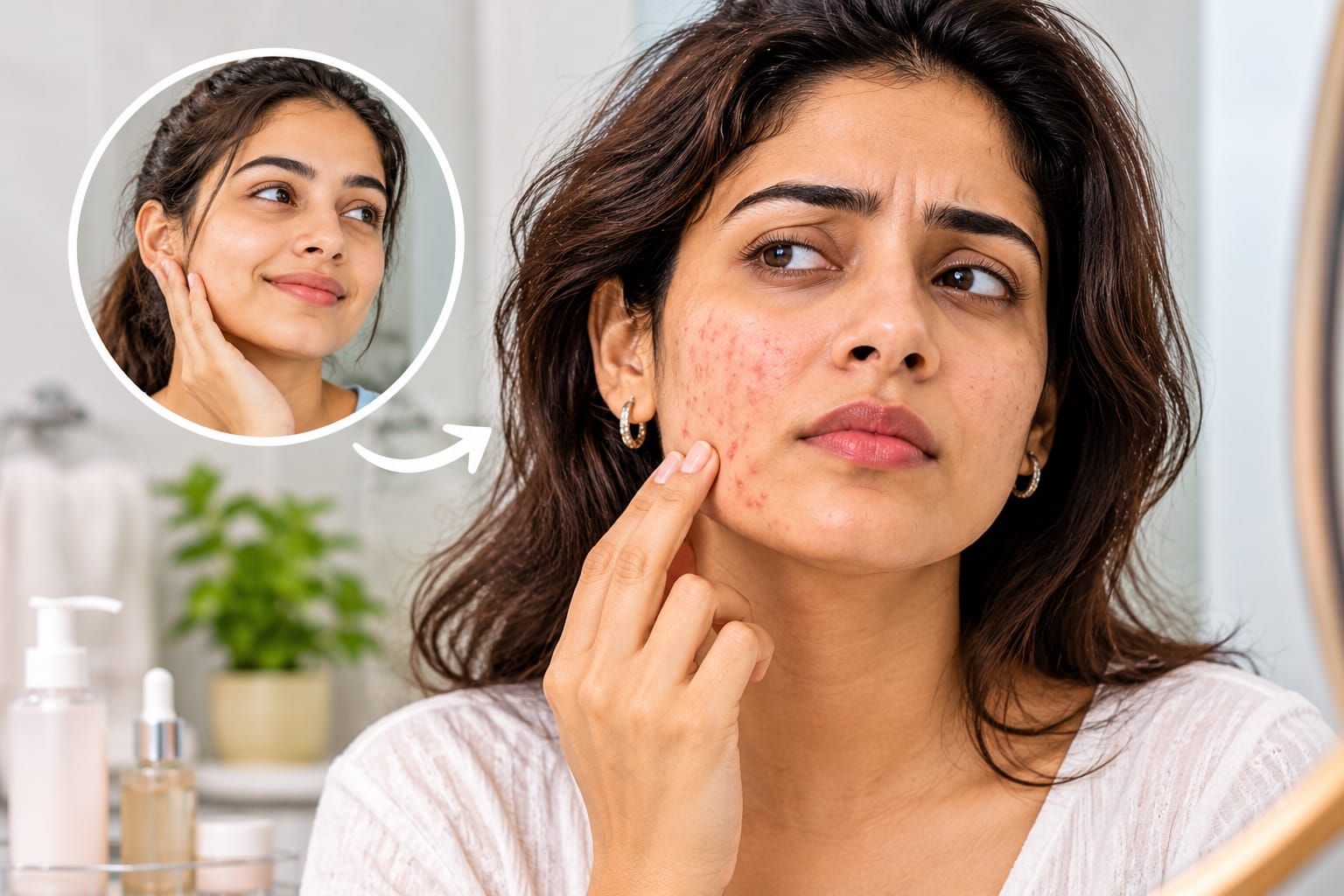
Teenage acne is mostly an oil and clogging problem across the forehead, nose and chin. Adult acne, which is far more common in women, tends to show up along the jawline, chin and lower cheeks, as deeper inflammatory lesions that last longer and mark more.
It is not the same problem, and the teenage playbook — strip, dry, scrub — reliably makes it worse.
Why now
Acne at any age comes from the same four mechanisms: excess sebum, abnormal shedding inside the follicle, Cutibacterium acnes, and inflammation. What changes in adulthood is what is driving them.
Hormonal fluctuation is the common thread. Lesions that flare in the week before a period, concentrated on the lower face, point this way. So does acne that arrives or worsens after stopping hormonal contraception.
PCOS deserves ruling out if acne comes with irregular cycles, hair thinning at the scalp, or excess hair growth elsewhere.
Stress raises cortisol, which raises sebum. This is real, not a brush-off.
Products cause more adult acne than people expect — heavy hair oils along the hairline, occlusive makeup, and the thick creams people start using for anti-ageing.
Medication can trigger it: some progestins, corticosteroids, lithium and a few others.
What the teenage advice gets wrong
Harsh cleansers and astringents. Adult skin is drier and the barrier is less forgiving. Stripping it produces irritation that looks like more acne and makes every treatment sting.
Scrubbing. Physical exfoliation on inflamed lesions increases inflammation and post-inflammatory marks. It does not unclog anything.
Spot treatment only. Adult acne needs the whole affected area treated, because you are preventing the next lesion, not drying the current one.
Skipping moisturiser. Almost every effective acne treatment is drying. Moisturiser is what lets you stay on them.
What actually works
Topical retinoids — adapalene over the counter, tretinoin on prescription. These address the follicular shedding that starts the lesion. The first line for most adult acne.
Benzoyl peroxide — effective antibacterial, and uniquely, resistance does not develop against it. Start at 2.5%; higher strengths irritate more without working much better. It bleaches fabric, so use white towels.
Azelaic acid — slower, but it addresses acne and post-inflammatory pigmentation together, and it is one of the few options considered acceptable in pregnancy.
Salicylic acid — oil-soluble, so it gets inside the pore. Useful for comedonal acne, less so for deep inflammatory lesions.
Prescription routes — combined oral contraceptives and spironolactone for hormonally driven acne, oral antibiotics for a limited course alongside a topical, and isotretinoin for severe or scarring disease. All of these need a doctor.
The dark marks are a separate problem
What distresses most people with adult acne on brown skin is not the pimple but the brown mark it leaves for months afterwards — post-inflammatory hyperpigmentation. It is more common and more persistent on deeper skin tones.
Two things reduce it: treating the acne so fewer lesions form, and daily sunscreen so the marks fade instead of darkening. Picking a lesion reliably turns a two-week problem into a six-month one.
Give it twelve weeks
Every acne treatment needs eight to twelve weeks before you can judge it. Switching products every three weeks guarantees you never find out what works.
See a dermatologist when
There are painful nodules or cysts, acne is leaving scars or dark marks, three months of over-the-counter treatment has not helped, acne arrives suddenly with other hormonal symptoms, or it is affecting how you feel day to day. Scarring is far easier to prevent than to treat.
This article is general information, not a diagnosis or a treatment plan. Skin and hair conditions that look alike can need very different treatment. If something is painful, spreading, changing or not responding, see a qualified dermatologist in person.